
Software to define a key role before the job ad is written
A role clarity app helps companies define a key role before the job ad is written: it asks the hiring manager about goals, tasks and criteria, and turns the answers into the job ad, interview questions and success criteria from one source.
HIHB (High-Impact Hiring Blueprint) is such an app. This page sets out the ways to define a key role before the search, how to go about it, and how the HIHB app works.
Why the job ad comes too early
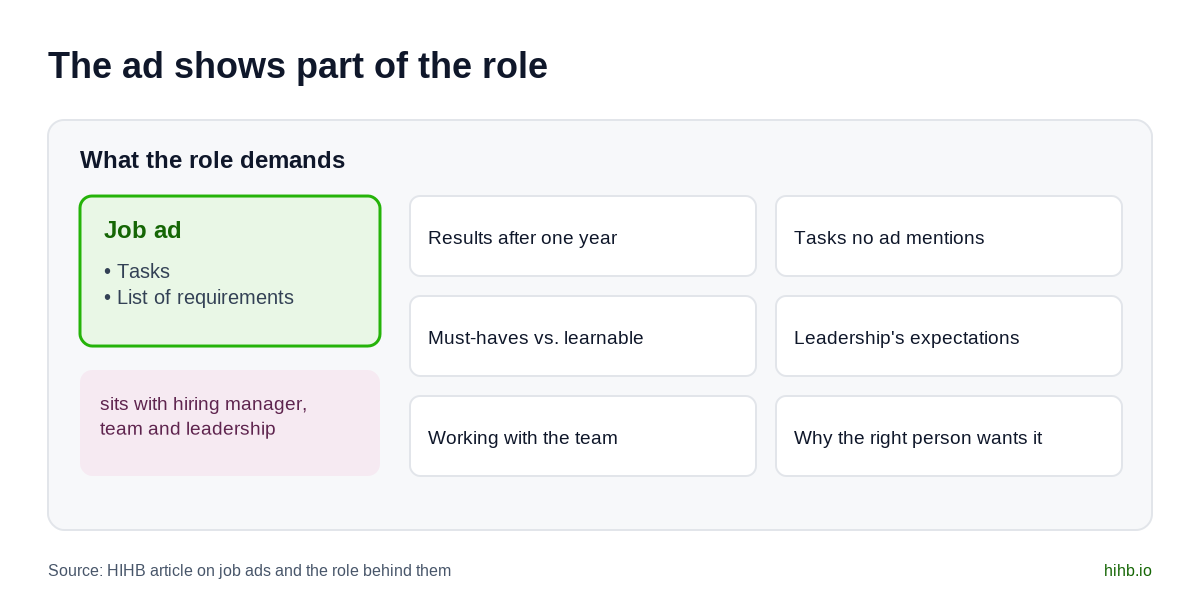
Many companies look for software that helps them define a key role before they write the job ad. The reason is almost always the same: the ad is written under time pressure, from the previous version and a short conversation. It lists tasks. What the person should have achieved after a year is rarely in it.
So a job ad shows only a small part of what the role demands. The rest sits with the hiring manager, the team and the leadership's expectations. It surfaces in the interview at the latest, when everyone involved asks about something different. The consequence: long processes, decisions based on impressions, and a higher risk that the hire does not work out.
The options
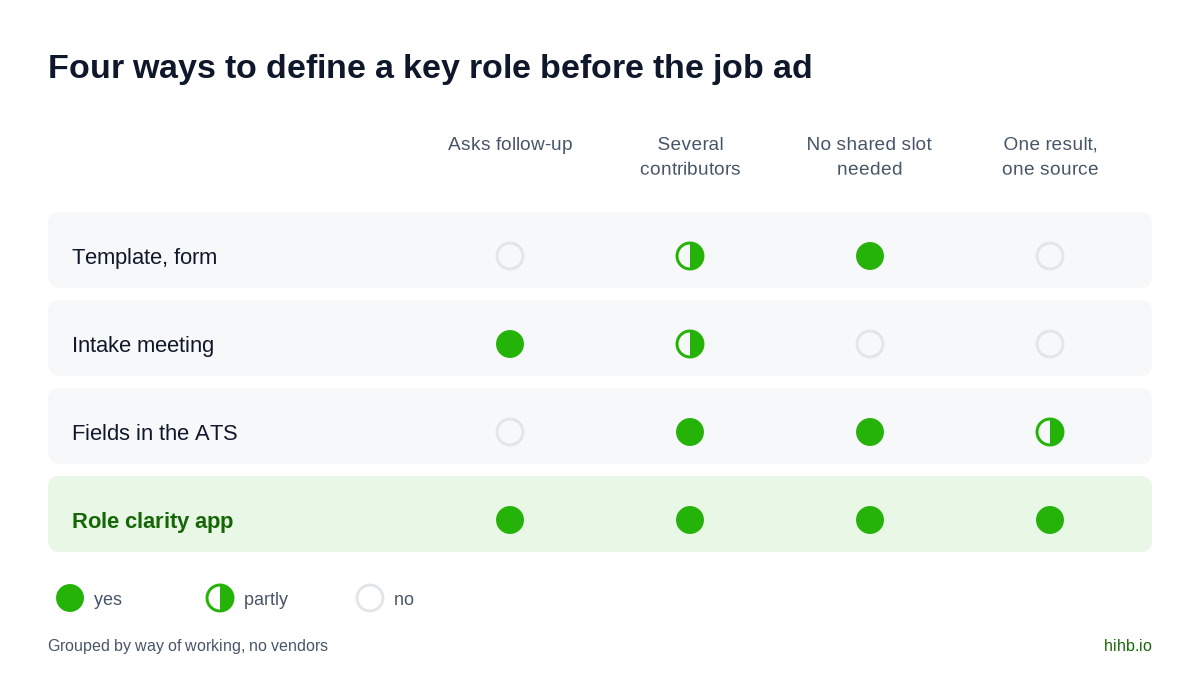
Four approaches are common. They are not mutually exclusive.
| Approach | What it does well | Where it reaches its limits |
|---|---|---|
| Template or requirements form | fast, consistent | does not follow up when an answer stays vague |
| Intake meeting with the hiring manager | direct, personal | needs a shared slot, the result depends on the notes |
| Requirement fields in the applicant tracking system | data sits where the process runs | captures what is entered, does not work out the role |
| Role clarity app | asks follow-up questions, several contributors, one result from one source | needs a session before the search |
How to go about it, with or without software
- Outcome before task. Ask first: six months from now, how will you know this was the right person?
- Write down what is invisible. What does this person do that no job ad mentions? Follow up on vague answers: what exactly do they do for that, week by week?
- Separate must-haves from what can be built up. What must the person be able to do from day one, and what can they learn in the first months?
- Hear everyone involved. Hiring manager, team and leadership often picture the role differently. This becomes visible when each voice is recorded separately.
- Derive everything from one source. Job ad, interview guide and assessment criteria come from the same answers. That way the interview tests what the ad promises.
How the HIHB app works
HIHB - the role clarity app for key hires. Recruiting sets up the session and hands it to the hiring manager, who works in the browser at their own pace. The Context Engine works in three steps:
- Collect: every answer becomes a card with a label and an author. Existing documents such as a job description or org chart can be added.
- Connect: the Context Engine relates the cards to each other and flags contradictions.
- Organise: the blueprint organises the knowledge into the job ad, sourcing channels, interview questions and first-year success criteria.
In the second part of the session, the 5C method guides through five steps (C1 to C5), from what follows from today's situation to the one insight into why the right person should want this role.
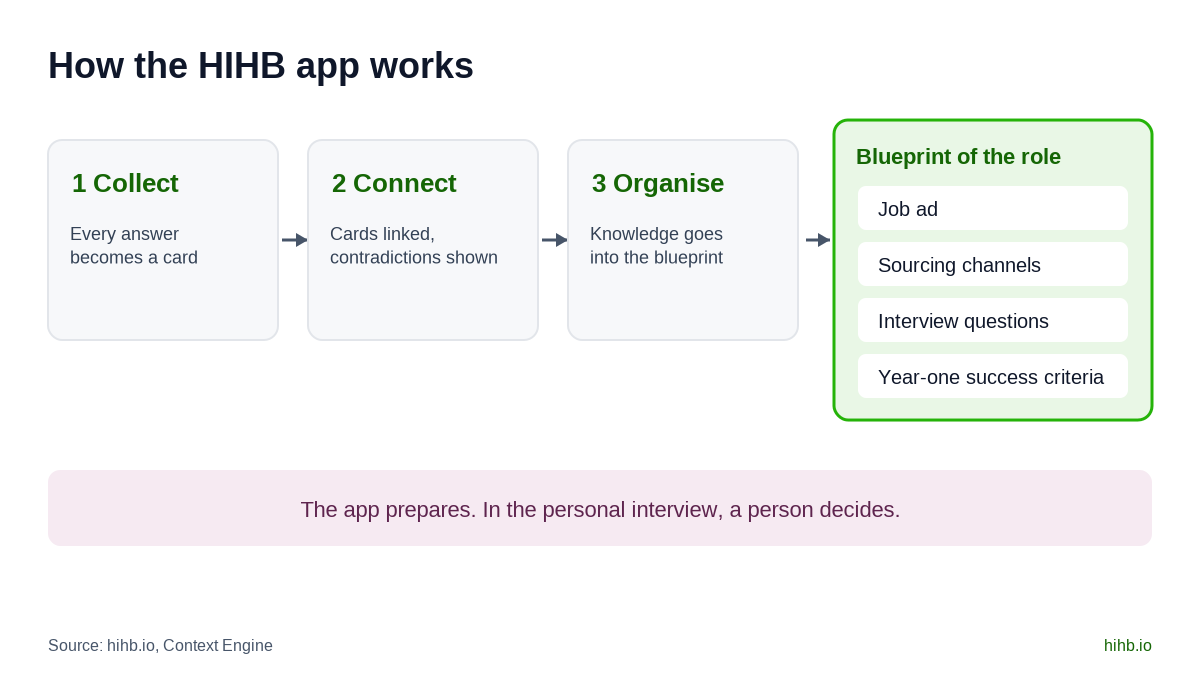
The app prepares. In the personal interview, a person decides.
Frequently asked questions
What is a role clarity app?
Software used to define a key role before the search starts. It works out goals, tasks and criteria with the hiring manager and derives the documents for search and selection from them.
Does the app replace the conversation with the hiring manager?
No. It replaces the shared slot as the only opportunity. The hiring manager answers the questions when they have time. Recruiting sees what has been added and picks up from there.
How long does a session take?
That depends on the role. The hiring manager can pause and continue later; every answer stays as a card.
What do I have at the end?
A blueprint of the role with the job ad, sourcing channels, interview questions and first-year success criteria.
Where is the data processed?
In the EU, with a separate data space per customer. Details are on the GDPR and EU AI Act page.
What does HIHB cost?
Packages and prices are listed on hihb.io under pricing. You decide after the first finished blueprint, not before.
Read on
- The method at a glance
- The 5C method
- Job ads show only part of the role
- Brief before you recruit
- Requirements engineering in recruiting
- Bias starts before the search
- How HIHB is built
- More questions: role clarity app, role scorecard, hiring manager intake meeting
You decide after the first finished blueprint, not before.
Request access