
Internal mobility as a recruiting strategy: the invisible talent pool.
1The data: 41 percent longer tenure with internal moves
LinkedIn reports, on the basis of its platform data: employees who move into a new role internally stay about 41 percent longer at the company than employees without internal mobility.1
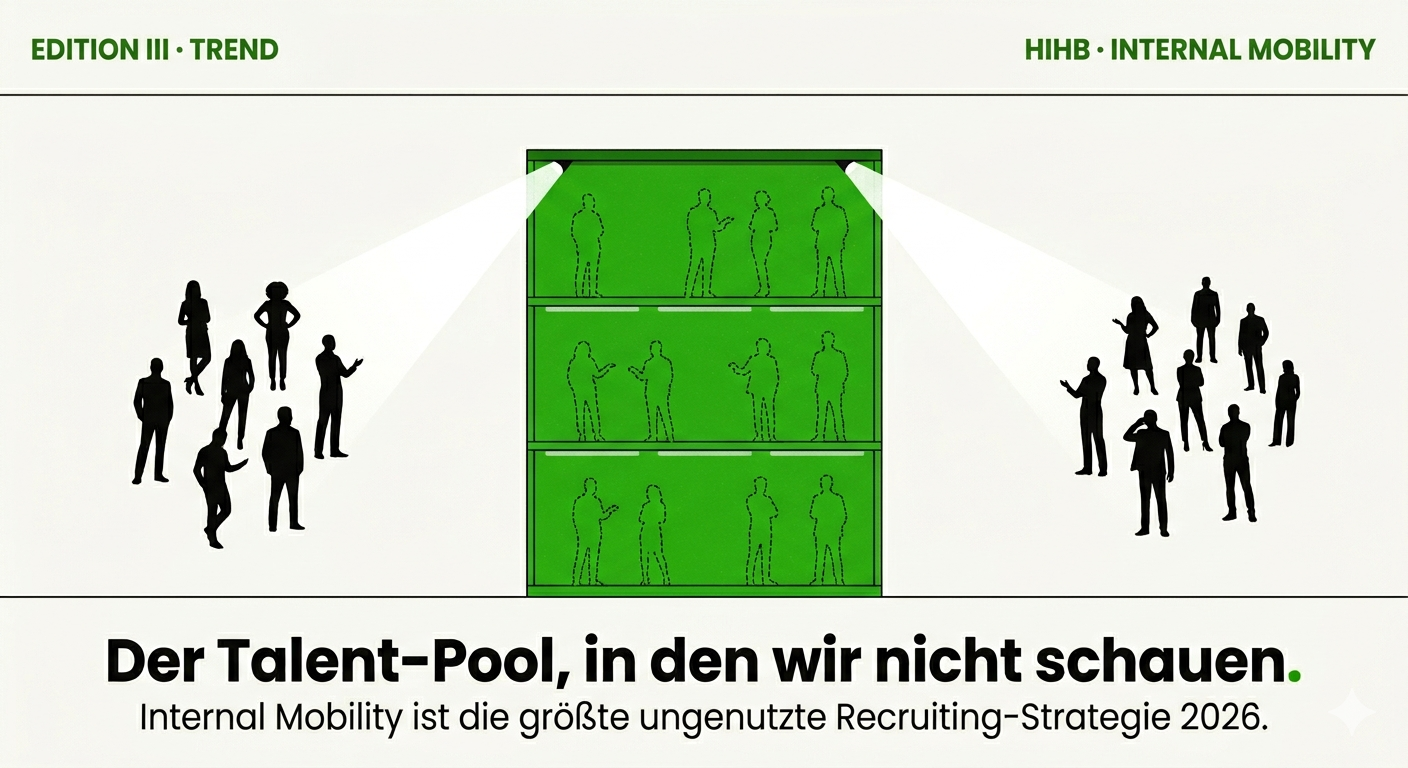
It is one of the more robust recruiting statistics of the past ten years, and one of the least used. Many critical hires are still started externally, without systematically checking the internal talent pool.
… for employees who move into a new role internally, versus employees without internal mobility. Yet many critical hires are still started externally.
2Why internal movers stay longer
The retention difference is not accidental. Three structural advantages of internal movers over external hires:
Advantage 1: existing stakeholder relationships
An internal person frequently already has relationships with the stakeholders they will work with in the new role. They do not need to build new relationships, they deepen existing ones. That saves six to twelve months of relationship-building time. The invisible stakeholder (see The invisible stakeholder) is often known to the internal person.
Advantage 2: cultural codes are understood
Onboarding missteps - the early-phase mistakes that decide between successful and failed external hires - happen less often to internal movers. They know the tone, the communication paths, the unwritten rules. That often makes the difference between a 90-day success and a 90-day failure.
Advantage 3: a broader career relationship with the company
An external person sees the new role as a job: if it does not fit, they resign. An internal person sees the new role as part of a longer career inside the company: if it does not fit, they look further internally and rarely resign.
3Three blockers that prevent internal mobility
If internal mobility works so well, why is it not used systematically? Three structural blockers:
Blocker 1: hiring managers do not see "finished" candidates internally
External candidates show up with polished CVs and target their positioning. Internal people are seen in the context of their current role, not in the context of the future role. As a result, hiring managers frequently underestimate internal candidates and look externally.
Blocker 2: recruiting is defined as "external search"
Recruiting teams are often organised for external search (direct outreach, job ads, headhunter relationships). Internal mobility sits between HR areas, usually without clear ownership. Nobody systematically checks whether the open critical role could be filled internally.
Blocker 3: area heads block internal poaching
When a division head notices that a strong internal performer could be a candidate for a critical role elsewhere, they block the move. They want to keep the person in their own team. The result: the invisible internal talent pool stays invisible because it is actively hidden.
4How HIHB systematises internal mobility
The HIHB Workshop addresses the internal mobility blockers in two steps of the 5C Method:
Step C-5 (Clarification): in stakeholder mapping the question is asked explicitly which internal people would qualify for the role, and which area heads would block the move. The invisible stakeholders are identified before the external search begins.
Step C-4 (Coordination): in persona definition the question runs: "Which persona, not which CV, fits the role?" That question opens the internal pool, because internal people often match better by persona match even when their current CV does not score 100 percent against the job ad.
Concrete prompt for the next briefing: before the recruiting team is briefed, ask one question in the workshop: "Who in our organisation could fill this role in six to twelve months, with what preparation?" If three or more names come up, an internal mobility option is worth a serious look before going external.
Frequently asked questions
What is internal mobility in recruiting?
Internal mobility means filling a critical role primarily through an internal move rather than through external recruiting. According to LinkedIn platform data, employees who move internally stay about 41 percent longer at the company.
Why do internal movers stay longer?
Three reasons: 1. They know the stakeholders and do not need to build relationships from scratch. 2. They know the cultural codes and avoid onboarding missteps. 3. They have a broader career relationship with the company.
Why do companies fail to use internal mobility systematically?
Three blockers: hiring managers do not see "finished" candidates internally; recruiting is defined as "external search"; area heads block internal poaching of their talent.
Sources
- LinkedIn Talent Blog, "Employees Stay 41% Longer at Companies That Use This Strategy". Available at: linkedin.com/business/talent/blog/talent-management/employees-stay-41-percent-longer-at-companies-that-do-this. Analysis of LinkedIn platform data on internal mobility and tenure. ↩

Leads the HIHB methodology at HireWorks. Has facilitated workshops since 2018 with founders, management boards, recruiting teams, and hiring managers across DACH mid-market firms, large corporates, and start-ups.
A critical role on your desk?
Fifteen minutes for the internal-mobility check.
In 15 minutes we test whether your next critical hire could be filled internally and what preparation that would take.
Book a 15-min fit call